


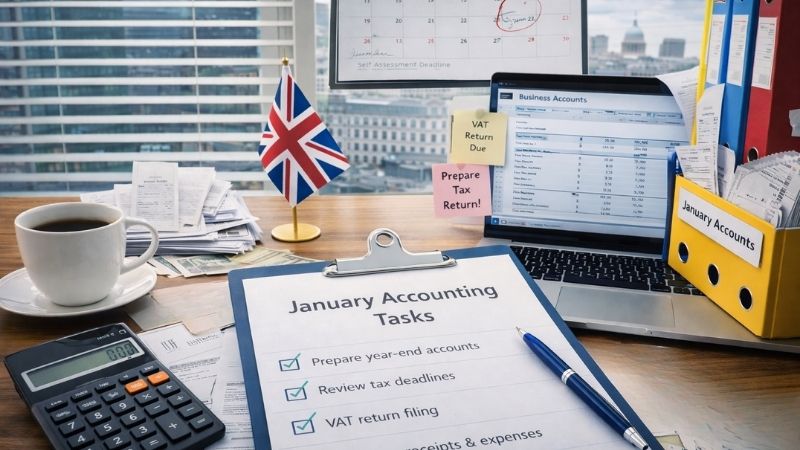
January is not just the start of a new year – it’s one of the most important accounting checkpoints for UK small businesses. Key tax deadlines, year-end preparation, and record-keeping tasks converge early in the year, and missing them can quickly turn routine compliance into avoidable stress or penalties.
The good news: none of this is unexpected. January accounting success isn’t about last-minute fixes – it’s about methodical follow-through on tasks businesses already know are coming.
Below is a practical January accounting reset to help small businesses start the year on solid financial footing.
Why January Matters More Than You Think
January sets the tone for your entire financial year. Decisions made, or delayed, now can affect cash flow, tax exposure, and reporting accuracy months down the line.
For many small businesses, January is when:
- Self Assessment deadlines loom
- VAT returns are due
- Year-end figures need final review
- Records from the previous year must be organised and validated
Treating January as a financial reset, rather than a paperwork burden, helps reduce risk and improves visibility across the year ahead.

Core January Accounting Tasks
Most January accounting work falls into a few predictable categories:
1. Finalise Year-End Records
Ensure all income, expenses, invoices, and receipts from the previous tax year are complete and correctly categorised. Missing or misallocated transactions often surface later – usually at the worst possible time.
2. Review VAT Obligations
If your business is VAT-registered, January is a common filing period. Double-check figures, confirm VAT rates were applied correctly, and ensure records align with Making Tax Digital requirements.
3. Prepare for Self Assessment Deadlines
For sole traders, landlords, and company directors, January 31 is the Self Assessment filing and payment deadline. This includes:
- Submitting the tax return
- Paying any tax owed
- Making the first payment on account (if applicable)
Leaving this until the final days increases the risk of errors or penalties.Get Clear on Last Year’s Numbers and Set Financial Priorities
Before diving into admin tasks, it’s worth stepping back to look at the bigger picture. Reviewing last year’s profits, margins, and costs gives you a realistic view of how your business is performing.
Understanding what worked – and what didn’t – allows you to set meaningful financial goals for the year ahead. Whether your focus is improving cash flow, increasing profitability, or planning for growth, clear numbers lead to smarter decisions and fewer surprises.
Tidy Up Receipts and Expense Records
Missing receipts often translate directly into missed tax relief. January is an ideal time to collect digital and paper receipts, organise expense records, and ensure everything is properly logged.
This is particularly important for travel costs, equipment purchases, subscriptions, and home office expenses. Well-organised records make it easier for your accountant to claim allowable expenses accurately and reduce your tax bill without guesswork.
Review Who Owes You Money and Assess Cash Flow
Outstanding invoices can quietly strain cash flow, especially early in the year when costs often increase. January is a good opportunity to review unpaid invoices and put a clear plan in place to follow up on overdue payments.
At the same time, take a broader look at cash flow. Understanding what’s coming in and going out over the next few months helps guide decisions around spending, staffing, and tax planning – before pressure builds.
Reconcile Bank Accounts and Credit Cards
Reconciling bank and business credit card accounts means matching your accounting records to your actual bank statements. It’s one of the simplest ways to catch errors, duplicate entries, or missing transactions early.
Doing this at the start of the year confirms your opening balances are correct and reduces the risk of issues later – particularly when preparing VAT returns, management accounts, or year-end figures.
Check Key Tax Dates for the Year Ahead
Every business faces multiple HMRC deadlines throughout the year, and missing one can result in penalties or interest. January is the perfect time to map out important dates such as VAT returns, payroll submissions, corporation tax payments, and Self Assessment deadlines.
Having these dates clearly diarised, or managed by your accountant, helps eliminate last-minute stress and keeps your compliance on track.

Review VAT Returns and Your VAT Scheme
If your business is VAT registered, January is a sensible time to review your VAT position. Check that recent returns have been submitted correctly and that your records support the figures reported.
It’s also worth reassessing whether your current VAT scheme still suits your business. Changes in turnover or structure may mean another scheme could improve cash flow or reduce administrative effort.
Double-Check Payroll and PAYE Information
Payroll errors can be costly and time-consuming to correct later. January is a good point to review employee details, salaries, benefits, and PAYE submissions to ensure everything is accurate.
For directors, it’s also an opportunity to revisit how you’re paying yourself and whether your salary and dividend mix remains tax-efficient for the year ahead.
Organisation Is a Compliance Advantage
Strong organisation isn’t just about tidiness – it’s a compliance safeguard. Well-maintained records reduce:
- Filing errors
- Missed deadlines
- Stress during audits or HMRC queries
Digital tools, cloud accounting platforms, and clear documentation processes make January far more manageable – especially for small teams.

Start the Year Clean
January accounting doesn’t require dramatic changes or complex restructuring. It’s about discipline, accuracy, and follow-through on known obligations.
Businesses that treat January as a financial reset – rather than a scramble – are better positioned for stability, growth, and fewer surprises as the year unfolds.
Here’s a clean, professional CTA tailored to the January accounting checklist topic, keeping the same tone and structure but aligned to ongoing compliance and planning rather than a single deadline:
If you want January’s accounting tasks handled properly – without last-minute pressure – speaking to an accountant now can help you stay compliant, improve cash flow, and start the year with clarity. Pearson McKinsey supports UK small businesses with accurate bookkeeping, proactive tax planning, and ongoing advice, so nothing slips through the cracks as the year unfolds.
Get in touch with us today:
📞 Call us at: 020 8520 8442
✉️ Email us at: info@pearsonmckinsey.co.uk