


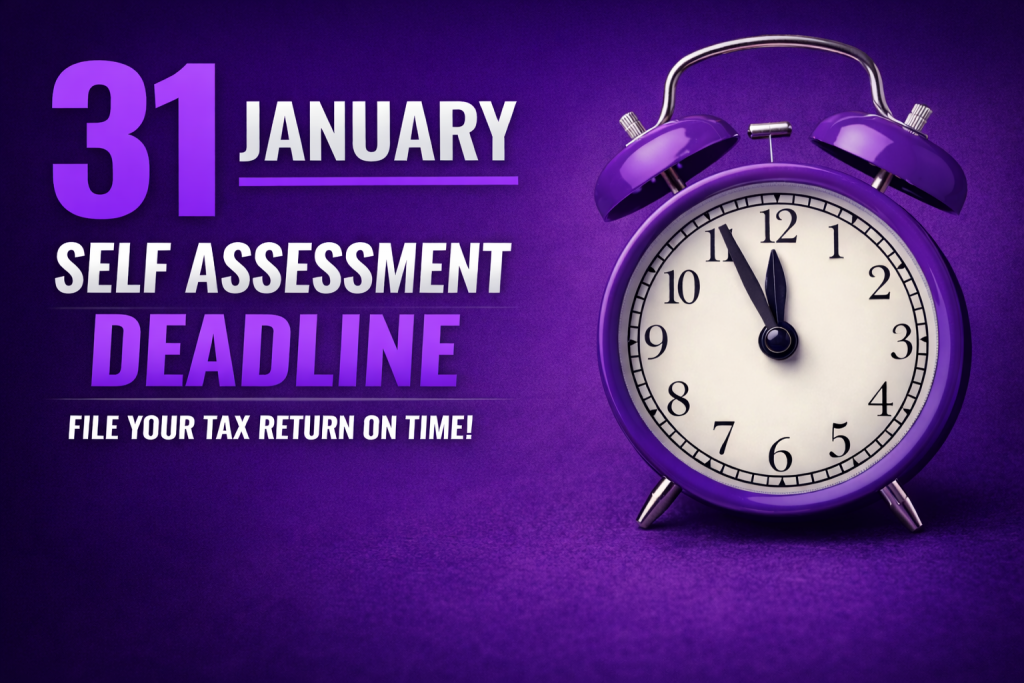
Every January, thousands of UK taxpayers find themselves asking the same thing: “When exactly is my tax return due?” Whether you’re self-employed, earning rental income, running a limited company, or submitting a return for the first time, knowing the deadline – and what it involves – is essential.
The Self Assessment deadline isn’t just an administrative date in the calendar. It determines whether you remain compliant, avoid penalties, and keep matters straightforward with HMRC. Understanding the timing — and your options — gives you far more control, even if January has arrived quicker than planned.
For the majority of taxpayers, the key date to remember is:
31 January, which is the deadline to:
- Submit your online Self Assessment tax return
- Pay any tax owed for the previous tax year
Missing this deadline can trigger penalties and interest, but it doesn’t automatically mean the situation is irreparable. What matters most is how quickly you respond and what steps you take next – and professional advice can make a significant difference.
It’s January, and I Haven’t Filed – What Should I Do?
First: don’t panic. Then focus on these steps, in order.
Start With What You Have
Perfection isn’t required at this stage. Begin by pulling together anything relevant, such as:
- P60s or P45s
- Self-employed income details
- Dividend vouchers
- Rental income records
- Pension contributions
- Known business or personal expenses
Missing documents are extremely common in January. An accountant can often help identify gaps and work through them efficiently.
Confirm Whether You Actually Need to File
Receiving a reminder from HMRC doesn’t always mean a return is required. You may not need to submit if:
- All your income has already been taxed at source
- Your earnings fall below the Self Assessment threshold
- HMRC issued the notice in error
This can usually be clarified quickly by an accountant and may save you unnecessary work.
Speak to an Accountant as Soon as Possible
January is busy – but it’s not too late.
A qualified accountant can:
- Complete and submit your return quickly
- Identify allowable expenses you might overlook
- Reduce your tax bill legitimately
- Deal directly with HMRC on your behalf
Many firms are experienced in handling January submissions under time pressure.
Avoid Ignoring the Situation
Doing nothing is the worst option. Failure to act can result in:
- An automatic £100 late filing penalty
- Daily penalties after three months
- Interest on unpaid tax
- Escalating stress and HMRC correspondence
Even submitting late is far better than not submitting at all.

Can an Accountant Still Help in January?
Yes – and this is often when professional support is most valuable.
An accountant can:
- Fast-track your return
- Ensure accuracy under pressure
- Handle HMRC correspondence
- Advise on payment options if cash flow is tight
- Correct previous errors
Outsourcing at this stage can often save both money and stress.
What Happens If the 31 January Deadline Is Missed?
If you miss the deadline, penalties may apply – but prompt action still counts.

How Late Filing Penalties Work
- £100 immediate fine
- After three months: £10 per day (up to £900)
- After six months: further penalties
- Interest charged on any unpaid tax
HMRC is often more reasonable when taxpayers act quickly and communicate properly, particularly when an accountant is involved.
What If I Can’t Pay My Tax Bill Right Now?
This is more common than many people realise.
Potential options include:
- HMRC Time to Pay arrangements
- Staged or instalment payments
- Reducing liabilities through legitimate reliefs
An accountant can negotiate directly with HMRC and help minimise penalties and interest.
How Long Does a Tax Return Take With Professional Help?
This depends on complexity, but generally:
- Straightforward returns can often be completed within a few days
- More complex cases may take one to two weeks
- January delays are usually caused by missing information, not the accountant
The earlier you engage support, the smoother the process tends to be.
Final Thought: January Isn’t the Problem – Inaction Is
If your Self Assessment is still outstanding in January, you still have options. Acting now, rather than panicking or delaying further, puts you back in control.
With the right advice, what feels like a stressful deadline can become a manageable, compliant – and often less costly – outcome.
Need Help With a Last-Minute Tax Return?
If you’re close to the Self Assessment deadline, speaking to an accountant now could help you avoid penalties, save time, and reduce unnecessary stress. Pearson McKinsey works with UK taxpayers to ensure returns are handled accurately, efficiently, and with clarity – even when time is tight.
Get in touch with us today:
📞 Call us at: 020 8520 8442
✉️ Email us at: info@pearsonmckinsey.co.uk